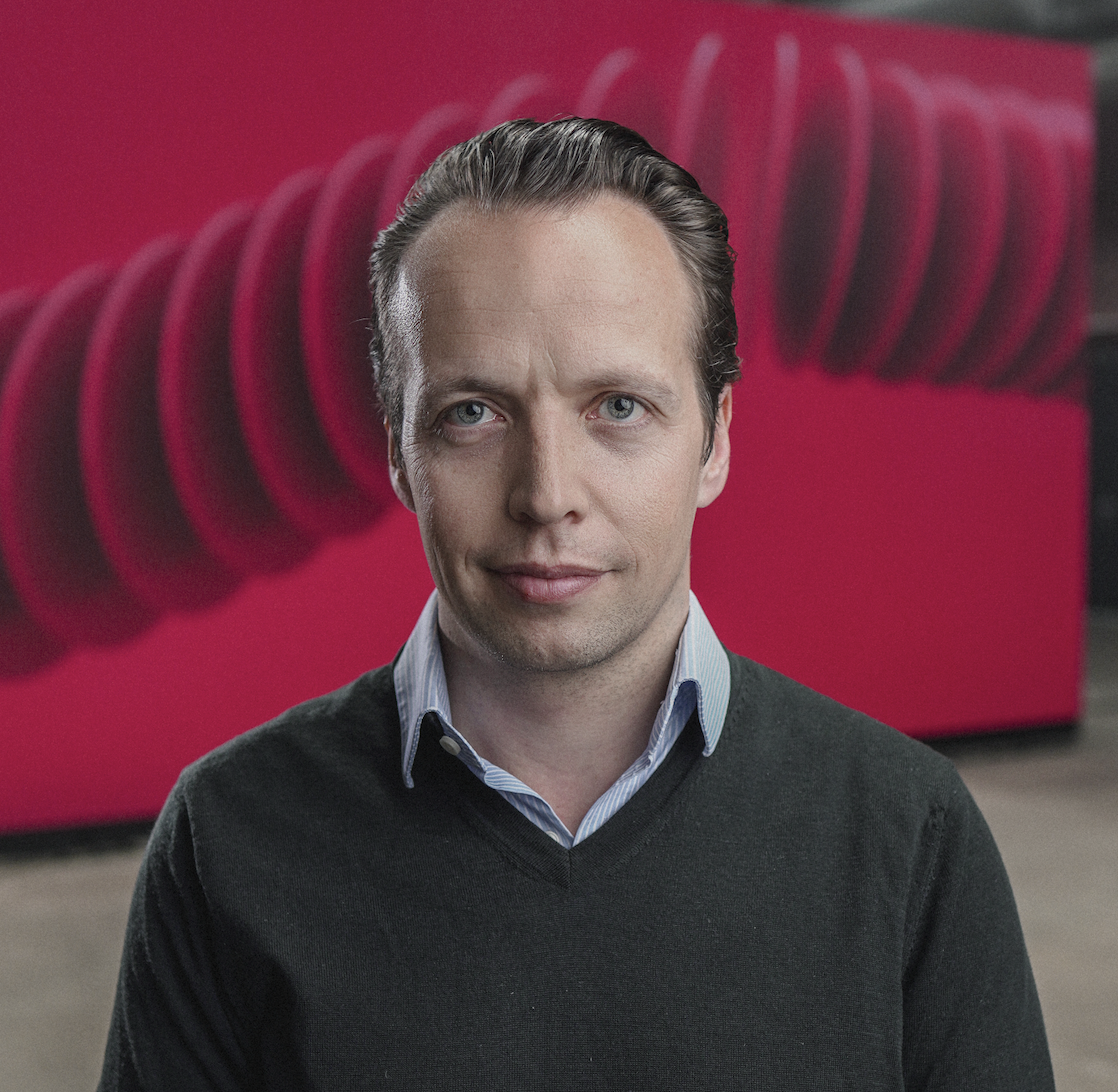
Preparing a CSRD report is a highly complex undertaking, even though the recently proposed Omnibus Regulation is expected to bring significant simplifications, especially for SMEs. Dr. Max Steiger, Chief Compliance and Governance Officer at Unzer Group, is responsible for the financial services provider’s reporting process and shares practical insights from the company’s experience.
Mr. Steiger, what role do you play in preparing Unzer’s CSRD report?
As the person responsible for ESG at Unzer, I coordinate the cross functional work around the report, provide strategic direction, and manage the dialogue with our various stakeholders. That includes shareholders, suppliers, partners, management, employees across four countries, and our external auditors. Internally, we have been preparing for this report for more than a year.
In your long career, have you ever experienced a project as complex as CSRD?
Without question, the CSRD is extremely detailed and presents major challenges, especially for mid sized companies.
You have more than twenty years of experience in governance and compliance. Did that background help you deal with such a detailed directive?
Absolutely. Over the past two decades, I have seen regulators in Europe and Germany become increasingly detail-driven. The exact percentage varies by industry, but well over 80 percent of our regulatory requirements are discussed and adopted in Brussels before being implemented at national level.
That experience with a wide range of regulatory frameworks, mostly in the compliance space, definitely helped me approach the CSRD more effectively, especially when it came to structuring the requirements hidden within both the directive itself and the even more detailed underlying standards.
The report involves countless data points, complex new processes, and enormous coordination and time commitments. How have you managed that so far?
As soon as the CSRD became more concrete, we started by mapping out exactly what would be required from us. We also brought in external support from a consulting firm that had already worked with large companies subject to reporting requirements.
Together, we worked through the dense regulatory framework to determine what was truly relevant for us and where simplifications could reasonably be made to make the process more manageable for our company.
The CSRD creates an unprecedented level of transparency. How has that changed your work, requests, audits, or internal processes?
To properly address the different Environmental, Social, and Governance requirements, as well as the broader ESRS 1 and 2 standards, which go even further, we had to work at a much deeper level of detail. In the Environmental and Social areas especially, the first challenge was data collection. Where are the right data sources? How can we gather and evaluate the data properly?
At the same time, we also had to present the results in a way external readers could actually understand without sounding overly bureaucratic or dominated by “EU speak.” That was, and still is, one of the biggest challenges in preparing the report.
You have already mentioned many challenges, and I hear quite a bit of criticism. What do you actually see as positive about the CSRD?
From a strategic perspective, I support the Green Deal, which Ursula von der Leyen originally presented in 2019 as Europe’s “moon landing.” The goal of making Europe climate neutral by 2050 may be ambitious, but the underlying intention is absolutely right.
I am a father and now also a grandfather. When I think about this goal in relation to future generations, both personally and as a company, we fully support the responsibility to address climate change.
At the same time, the Green Deal has now evolved into the Green Industrial Deal, which represents a strategic shift: slightly away from focusing purely on climate protection and more toward active industrial policy and competitiveness. In my view, that is a very welcome development, especially because mid sized companies face much greater difficulties implementing a framework as complex as the CSRD on a one to one basis.
And that is also where my criticism comes in. The EU has fallen into a familiar trap by shifting the pendulum too far from emphasizing sustainability goals toward excessive regulatory complexity. Put bluntly, you could describe it as bureaucracy taken to extremes, which has now led to attempts to simplify the growing web of regulation through the proposed Omnibus packages.
Some companies see sustainability reporting as a mandatory exercise, while others see it as an opportunity to communicate more broadly about their impact and values. What approach is Unzer taking?
We do not want to simply work through the requirements mechanically. Our ambition is to become a leader in the payments industry.
Many of the topics covered are genuinely relevant and valuable for our company. At the same time, the regulatory requirements have so far left very little room for flexibility. That is perhaps one of the biggest downsides of this extremely detailed regulatory approach coming out of Brussels: the original purpose — greater transparency and accountability — risks being undermined by reduced readability and relevance.
The sheer level of detail overloads companies and leaves very little room for them to communicate in a more authentic and meaningful way.
You already conducted a test run. Will that report also be published?
We are still in the middle of preparing the report, although several sections are already close to completion. However, because of the recently announced changes under the Omnibus Regulation, we now need to reassess many aspects and wait for further clarity.
At this point, I can only appeal to the EU to provide companies with certainty as quickly as possible about what rules will actually apply. Right now, we are operating in a state of legal uncertainty, and for any business leader, there is hardly a worse situation than not knowing exactly what standards ultimately apply.
Apart from the regulations themselves, what guidance did you rely on during the process?
We were desperately looking for examples and templates because there were very few available. I expect many more reports to be published over the coming months, especially since large corporations are already required to report starting in 2025.
That probably creates even more uncertainty.
Exactly. At that point, you mostly rely on your own judgment, which is not necessarily a bad thing. Even auditors are still figuring out how to approach these reports. A broader market standard still needs to develop in Germany regarding how these reports will ultimately be audited.
What advice would you give companies that are only now starting to work on their CSRD reports?
In general, you need a highly motivated team with the right expertise because the CSRD, more than almost any other topic, affects nearly every part of a company’s structure and operations while requiring an enormous number of data points.
The internal CSRD working group needs more than just technical knowledge of the requirements. It also needs the right contacts across the organization to develop a truly cross functional perspective. At the moment, I would advise small and medium sized companies to wait and see what decisions are made by the European Parliament and the Council of Ministers. If the Omnibus packages are implemented as currently proposed, SMEs could see significant relief.
Current estimates suggest that of the more than 50,000 companies originally expected to report under the CSRD in the EU, fewer than 7,000 may ultimately remain subject to the requirements.
What is your view on this proposal to exempt a large number of companies from reporting obligations?
From the perspective of a mid sized company, I welcome the Omnibus initiative because it aims to limit bureaucracy in many parts of the CSRD and related legal acts such as the EU Taxonomy. The original objective remains meaningful and worthwhile. But in practice, the extreme level of detail within the CSRD often produced the opposite effect. Refocusing on competitiveness and on giving companies greater responsibility to address these issues themselves is, in my view, a positive development. Especially because sustainability can also become a strategic opportunity for companies, both competitively and in relation to their business strategy, risk management, and stakeholder expectations.
At Unzer, we certainly will not slow down our efforts. We will continue on the path we started long before the CSRD implementation process began and will voluntarily continue many of the elements we believe genuinely make sense.
Voices from our Leadership

Retail needs less complexity, not more digitalisation


Retailers are ready to invest, but not in another system

AI at Work: Why Adoption Stalls, and How to Finally Get to Real Use